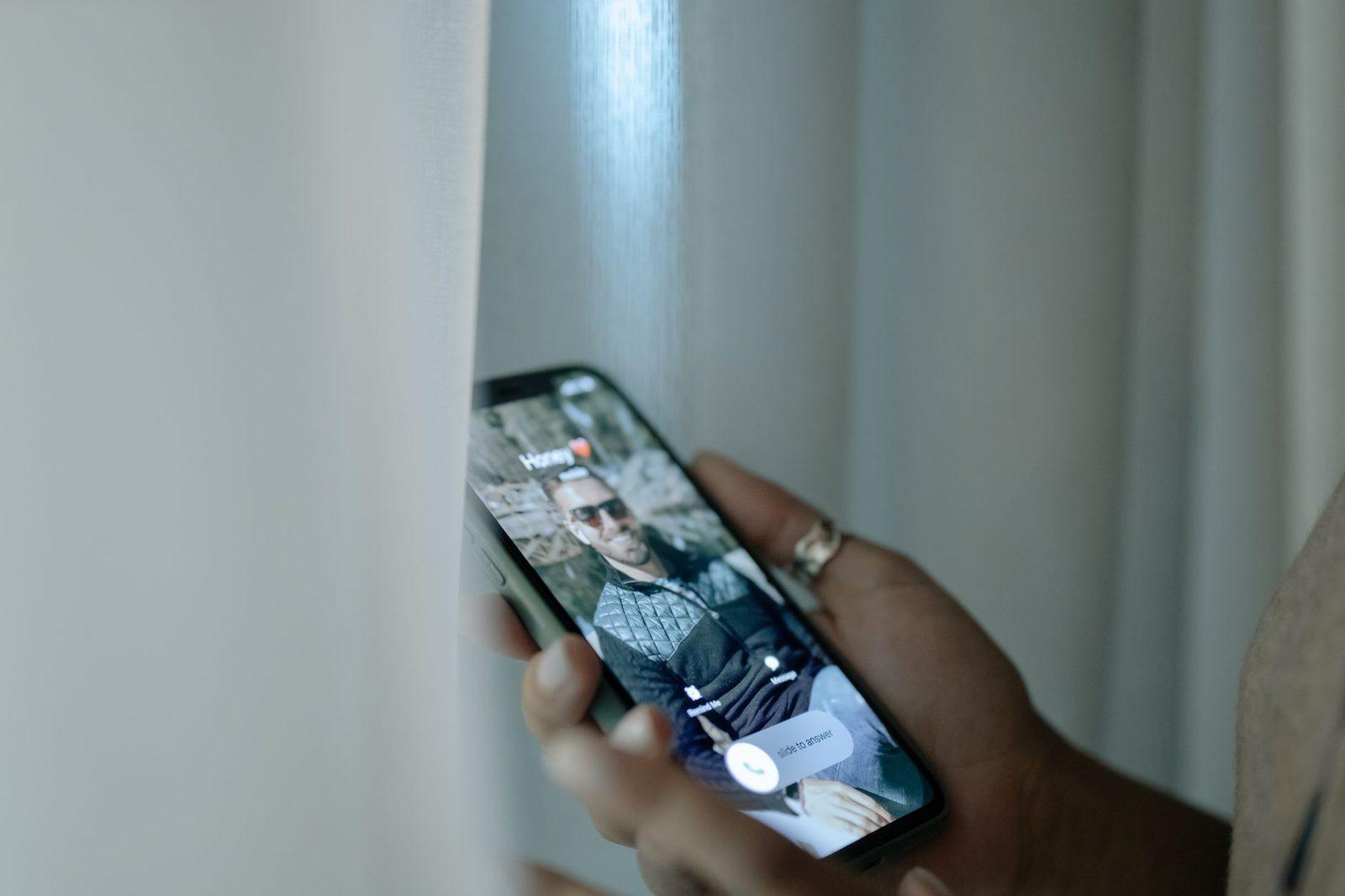
In short. Sending the same anonymous text to several recipients doesn't divide the risk, it multiplies it. The moment two people talk to each other, they compare the wording, the delivery time and the number displayed: three clues that, once cross-checked, often point to the sender within minutes. On top of that comes a technical trap — the group message (MMS or RCS), which shows the full list of recipients to every one of them.
Information verified on 1 November 2026 on the public pages of Arcep, the CNIL (French data protection authority), service-public.fr, Légifrance, cybermalveillance.gouv.fr, as well as on Apple's and Google's support documentation and the help pages of French carriers (Orange, SFR, Bouygues Telecom, Free Mobile). This article provides general information: display behaviour varies depending on the phone model, the system version and the carrier.

Why is an anonymous text sent to several people riskier?
Because a message's anonymity doesn't depend only on its content: it depends on what the recipient can compare. A single recipient holds just one piece of the puzzle. Two recipients who talk to each other hold three: the wording, the timing, and the number or sender name displayed.
The logic is mechanical. If you write to one person, they wonder "who?" and have a very wide pool of suspects. If you write to three people and they discuss it among themselves, the question becomes: "who knows all three of our numbers, and has a reason to write to the three of us?" In real life, that intersection is extremely small. Often a single person: you.
It's the same cross-referencing principle we described when covering the technical limits of anonymity in is an anonymous text really untraceable? — except that here, no court order is needed. The cross-checking is done by the recipients themselves, over a coffee.
Three mechanisms stack up:
- Social cross-checking. The intersection of address books points to the sender.
- Time cross-checking. The messages go out seconds apart. Near-identical timestamps prove a single send, therefore a single sender, therefore a coordinated message — not a coincidence.
- The technical leak. Depending on how you send, the phone may turn your send into a group conversation and expose the list of numbers.
Does a group text reveal the list of recipients?
Yes, and it's the most common mistake. On a phone, putting several numbers in the "To" field doesn't necessarily produce several independent texts: it can create a group conversation, in which every participant sees all the others.
The behaviour depends on a setting that is often overlooked:
| Sending mode | What each recipient sees | Risk |
|---|---|---|
| Individual text (sent separately to each person) | A single message, no other numbers | Low on the technical side |
| "Broadcast" / simple multi-recipient text | A single message, private replies | Low, but shared timestamp |
| Group MMS | The list of numbers and everyone's replies | High |
| RCS group conversation | List, profiles, sometimes read receipts | High |
On Android, the Google Messages app exposes a group messaging setting in its advanced message settings: you can choose to send a reply to everyone (group MMS) or to reply to the sender only (mass text). Google's support documentation describes this setting, whose label varies between versions. On iPhone, the Settings → Apps → Messages → Group Messaging setting governs the same trade-off on the iMessage/MMS side, as Apple Support indicates.
In other words: you may think you're sending five discreet messages while in fact you've opened a chat room where your five recipients discover one another. And in that room, each person's replies are read by the others, which speeds up the cross-checking even further.
For genuinely sensitive messages, the trade-off is simple: one recipient, one send, a different wording.
Does an online anonymous texting service change things?
Partly. A gateway or anonymous SMS website doesn't open a group conversation: each message goes out separately, and the recipient won't see the others. So the technical problem of the exposed list disappears, which is already a lot.
But the other two mechanisms remain fully intact:
- Identical wording stays identical. It's the first thing two recipients compare.
- The timestamp stays clustered. Even if you space out the sends, a series over the same evening gets noticed.
- The number or sender ID displayed may be the same for every message, which formally links the sends together. When a short code or an alphanumeric sender appears, it creates a shared signature: we go into detail on this point in who is the sender of an anonymous text?.
How these services work in general, and what stays visible or not, is described on the send an anonymous text page and in the guide send a text without giving your number.

Which uses genuinely justify several recipients?
Few, in truth. Before sending, ask yourself what your goal is: do you want to inform several people, or do you want each of them to know that the others know? Those two intentions call for different handling.
Cases where a multiple send makes defensible sense:
- A neutral practical update: a change of time, an address, a reminder. Nothing confidential, and the sender's identity isn't the point.
- Organising a surprise: several friends or relatives need the same instructions without the person concerned seeing it. The anonymity targets a third party, not the recipients.
- A prevention message to people who don't know each other: the intersection of address books is empty, so social cross-checking doesn't work.
Cases where you should drop the idea:
- A reproach, a warning, a revelation. The more loaded the message, the more the recipients will talk about it, and the faster they'll find you.
- A neighbour or workplace dispute. These are precisely the groups whose members talk every single day.
- Anything that can be read as a campaign. Legally, repetition changes the nature of the message: more on that below.
An often-overlooked detail: if your recipients use different types of device, they won't all have the same experience of the message. A notification preview on a smartwatch, for instance, shows the opening words with no context — and the comparison "I saw it on my wrist, you saw it on your screen" becomes a talking point. The same phenomenon applies to what the lock screen gives away.
How should you write if several people really do need to be told?
There is a method, and it takes a little work. The principle: remove everything the messages have in common.
- One message per recipient, written separately. No wholesale copy-pasting. Change the order of the sentences, the level of detail, the opening line.
- No collective "you". A "I'm writing to both of you" gives the group send away and defeats the whole purpose of the exercise.
- Space out the sends. A few hours apart, or even different days. The timestamp is the clue that's hardest to explain by anything other than a single send.
- Check the sending mode before the first message: turn off group messaging, and send a test to a second number you control.
- Send only once. Following up is the reflex that does the most damage; that's the whole point of sending a single anonymous text, without pushing.
- Write each message out in full before opening the app. A draft jotted down in a simple spiral notebook, then copied out, avoids half-written sends and clumsy variations.
If you have to handle several separate sends on the same day, discipline matters more than the tool. Noting down on paper who received what and at what time keeps you from repeating the same phrasing to two people who talk to each other. A squared pocket notepad is enough, and it doesn't sync with anything.
What does French law say when an anonymous message goes out to several people?
The number of recipients is an aggravating factor in how the facts are assessed, not a procedural detail. Three concepts come into play.
Harassment. Article 222-33-2-2 of the French Criminal Code punishes repeated remarks or behaviour that result in a deterioration of the victim's living conditions. The text expressly provides that the offence is established even where the messages come from several people acting in concert, or in succession, while none of them acted repeatedly on their own. The full text is available on Légifrance. Practical consequence: a coordinated send to several numbers, or to a person's circle, can fall under this offence even if you wrote only once.
Defamation and insult. As soon as a remark calling someone into question is addressed to several recipients, the question of public character arises, with distinct legal regimes and limitation periods under the Act of 29 July 1881. An accusation sent to ten people is no longer a private confidence.
Identity theft. Article 226-4-1 of the French Criminal Code punishes the use of a third party's identity in order to disturb their peace of mind or harm their reputation. Signing a collective message with someone else's name falls squarely under this provision.
Finally, anonymity can never be invoked against the courts. Upon a judicial request, carriers hand over the connection data they retain. The CNIL and Arcep set out the framework for this retention; the detailed reasoning, on both the sender's and the recipient's side, is developed in is it legal to send an anonymous text in France?.

What if you're the one receiving an anonymous message sent to several people?
The situation is common: while chatting with a colleague or a neighbour, you discover they received exactly the same text as you. That information is valuable, and it can be preserved.
What to do, in order:
- Don't reply. A reply confirms the number is active and belongs to a real person.
- Capture the message along with its context. The number or sender ID displayed, the date, the time to the minute, and the full text. The capture method that holds up in court is detailed in how to build solid evidence.
- Compare timings with the other recipients. A gap of a few seconds establishes a single send. That's a useful element in a complaint.
- Each person keeps their own screenshot. A screenshot of a screenshot loses its value. If several people are affected, each one documents their own copy. An external hard drive for archiving the screenshots prevents losing everything if the phone disappears.
- Report it and, if needed, file a complaint. The procedures and points of contact are set out by cybermalveillance.gouv.fr and by service-public.fr. For unwanted commercial texts, the 33700 reporting service remains the dedicated route.
- Block, without deleting. Blocking is done from the message details on both iPhone and Android. Deleting the conversation, on the other hand, destroys the evidence. The stop being contacted page sums up the options.
If the messages keep piling up and the phone becomes unusable day to day, changing your number becomes a question worth considering — with its own constraints, which we listed in changing your number to escape a harasser.
The most common mistakes, in a single list
- Leaving group messaging switched on and exposing every number.
- Sending strictly identical wording to people who know each other.
- Sending everything within the same minute.
- Writing "to everyone who…": the phrasing gives the multiple send away.
- Following up because nobody replied.
- Deleting the conversation on the sender's side believing it erases the network trace: what the phone forgets, the network does not. The point is detailed in after sending an anonymous text: what's left?.
FAQ
Can you send an anonymous text to several numbers in one go?
Technically yes, but it's inadvisable. Depending on your messaging app's settings, the send may create a group conversation that shows the list of numbers to every recipient. And even without a technical leak, identical wording and a shared timing make cross-checking possible.
How do I stop my recipients from seeing each other?
Turn off group messaging (Settings → Apps → Messages on iPhone, Google Messages advanced settings on Android), then send a separate message to each person. The safest approach remains one send per recipient, with different wording.
Does #31# work to hide my number on a group text?
No. The #31# prefix hides caller ID for a voice call only. It has no effect on a text, group or otherwise: the sender's number always travels with the message.
Is it illegal to write the same anonymous message to several people?
Not in itself. But the number of recipients weighs heavily in how the offence is characterised: Article 222-33-2-2 of the French Criminal Code covers coordinated sends in particular, and a remark calling someone into question in front of several third parties may amount to defamation or insult.
I received the same anonymous text as a colleague: what should I do?
Don't reply, each of you capture your own message with the exact date and time, compare the timestamps, then report the facts. Keep the conversations: deleting them destroys the evidence.
Updated 1 November 2026. Setting labels and display behaviour change with iOS and Android versions: check the group messaging setting before any important send.