In short. A phone without a SIM card cannot send a text message in the conventional sense: SMS travels over the carrier's network, and without a SIM there is no line, no sender number and no access to the message centre. The same device connected to Wi-Fi, however, remains a fully functional messaging terminal: webmail, an anonymous messaging service, an encrypted messaging account created separately. The anonymity you gain is real from the recipient's point of view, but it simply shifts: it is no longer your number that identifies you, it is your IP address, your account and your device.
Information verified on 16 October 2026 on the public pages of Arcep, the CNIL, service-public.fr, Légifrance, cybermalveillance.gouv.fr and on the support pages of Orange, SFR, Bouygues Telecom and Free Mobile. This article provides general information and is not a substitute for legal advice.
Can you send a text message without a SIM card?
No, not an SMS. The Short Message Service is a mobile network service: the message travels from the handset to a piece of carrier equipment called the service centre (SMSC), which timestamps it, stores it and relays it to the recipient. To reach it, the device has to be attached to the network, and to attach it needs an active SIM card tied to a contract or a prepaid plan.
Take the SIM out: the signal bars vanish, the Messages app displays "No SIM card" or "No service", and sending fails straight away. This is not a setting waiting to be unlocked, it is a technical impossibility.
Two exceptions worth knowing, often confused with sending a text:
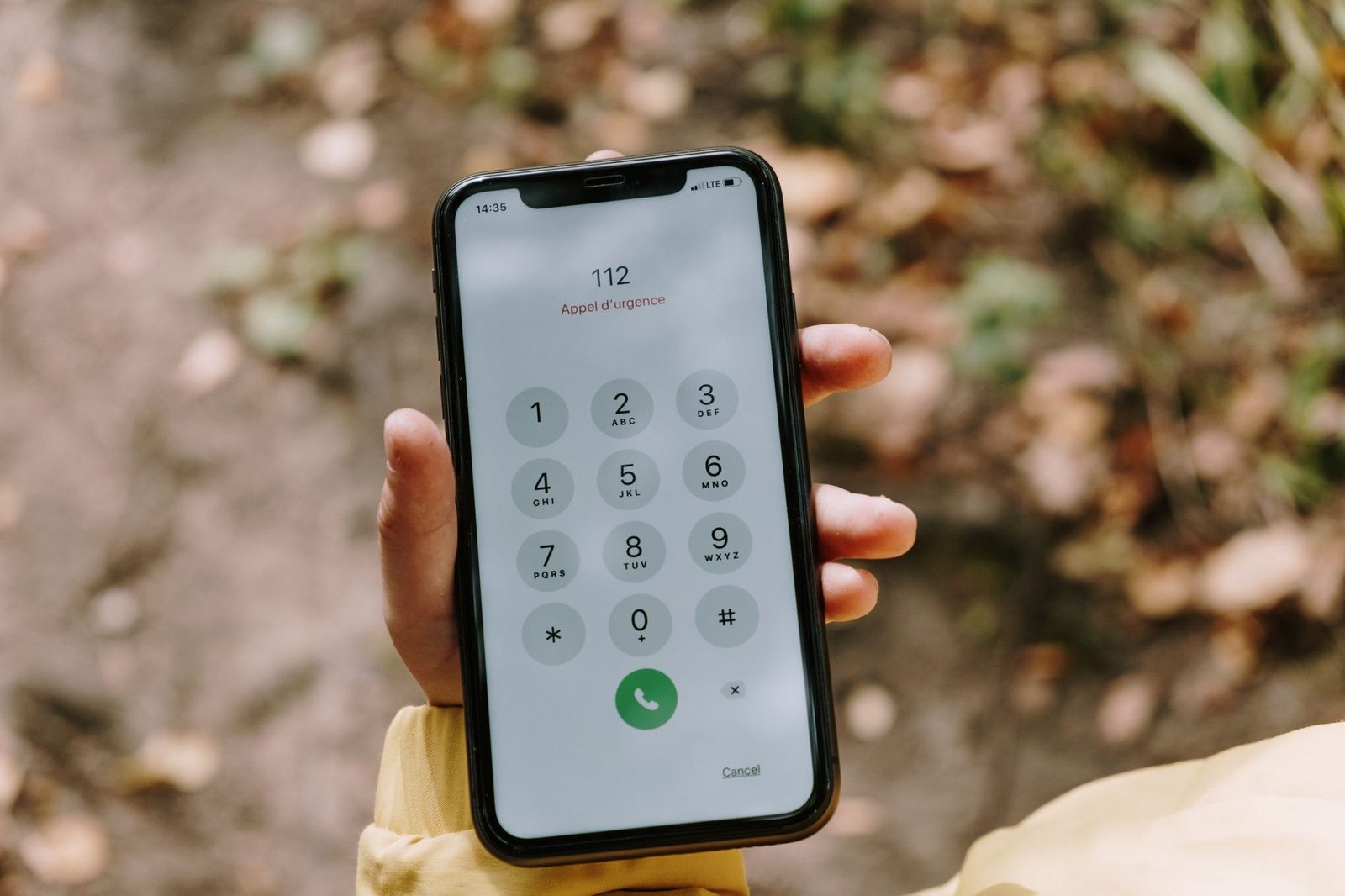
- Emergency calls. On most networks, a SIM-less handset can reach 112. This is a service obligation, limited to voice: it does not allow you to send free-form text.
- RCS and iMessage. On Android with Google Messages, or on iPhone with iMessage, a conversation can carry on over data while the SIM is absent if the account has stayed signed in. What you are sending is no longer an SMS but an internet message tied to your Google account or your Apple ID — in other words, to your identity, original number included. That is the exact opposite of the anonymity you were after.
What can a SIM-less phone still do?
Quite a lot, because a smartphone stripped of its SIM is not a paperweight: it is a pocket computer with a browser and a Wi-Fi chip. As long as it picks up a wireless network, it has access to everything that does not go through the carrier:
| Channel | Works without a SIM? | What the recipient sees |
|---|---|---|
| Conventional SMS | No | — |
| Conventional voice call | No (except 112) | — |
| Online message-sending service | Yes, over Wi-Fi | A shared sending number or an alphanumeric sender ID |
| Encrypted messaging tied to a number | No for account creation (SMS verification code), yes afterwards | The account's handle or number |
| Encrypted messaging without a number | Yes | An ID or a username |
| Yes | The sending address |
In other words: a SIM-less phone does not strike you dumb, it makes you change layers. You leave the mobile network, where you are identified by a line registered in your name, for the internet, where you are identified by an account and an IP address. We go into this shift in detail in our article on what remains traceable in an anonymous text message.
This is also why the old #31# reflex does not apply here. That prefix asks the network not to present your number to the person you are calling: it concerns calls, not messages, and it makes no sense at all when there is no line left.
Why use a SIM-less phone rather than your everyday mobile?
For one simple reason: keeping uses separate. On your main phone, everything is connected — synced address book, signed-in accounts, automatic backups, location history, banking apps. An "anonymous" message sent from that device is still two clicks away from matching up with your real identity, if only in your own backups.
A dedicated second device cuts those bridges. Many readers use an entry-level refurbished smartphone for this, kept offline most of the time, reset before use and with no personal accounts installed. The point is not performance, it is the absence of history.
Three precautions do most of the work:
- Reset the device before first use (Settings → System → Reset options on Android, Settings → General → Transfer or Reset iPhone on iOS). A second-hand device may carry traces of its previous owner — and conversely, you will leave your own behind if you do not wipe it before passing it on. That is the subject of our article on buying, reselling and wiping a phone without giving yourself away.
- Do not create an account with your usual credentials. No Google sign-in, no personal Apple ID, no backup restore: restoring re-imports precisely what you are trying to leave behind.
- Turn off backups and location as soon as you set it up, before installing anything at all.
One hardware detail that often trips people up: getting the SIM tray out without damaging it. A metal SIM card ejector tool, or a small set of precision phone screwdrivers on models that require opening a flap, saves you bent paperclips and warped trays. On recent devices with an eSIM there is nothing to remove: you have to delete the profile in Settings → Cellular Data, which is permanent and means asking the carrier for a new activation code. Not something to try on your main line out of curiosity.
What the recipient sees, and what the network keeps
On the recipient's side, a message sent through an online service from a SIM-less device never displays your personal number — you no longer have one. They see one of three things:
- a shared sending number (often a 10-digit mobile number or a short code), used in common by every message routed through the same service;
- an alphanumeric sender ID, that is, a name instead of a number, which cannot be replied to;
- an account identifier in the case of internet messaging.
What this setup does not hide: the trace on the service's side. Any provider established in the European Union logs sends and retains connection data, including the IP address. In France, this retention and the conditions for disclosure to the authorities are governed by the French Post and Electronic Communications Code and by the Criminal Code; the CNIL regularly points out that an IP address is personal data. Under a judicial request, these records can be handed over.
If you used public Wi-Fi, the IP recorded is the venue's — a station, a café, a public library. That erases nothing: it points to a place, a time window, sometimes a captive portal where you left an email address or a phone number to get access. Combined with a security camera or a till receipt, that information becomes personally identifying again. We described this mechanism in our article on Wi-Fi, Bluetooth and the silent tracking of your movements.
The anonymity of a message is never a state, it is a degree. Without a SIM, you are invisible to the recipient and to the mobile carriers. You remain visible to the service you use, to whoever runs the Wi-Fi network, and to the courts if they ask.
How to go about it, step by step
For a one-off, legitimate send — warning someone, passing on sensitive information, getting back in touch without exposing your own line:
- Remove the SIM (or delete the eSIM profile if the device is dedicated to this use) and check that "No service" is displayed.
- Turn off Bluetooth and location, then enable Wi-Fi only.
- Check that no personal account is signed in: Settings → Accounts on Android, Settings → [your name] on iOS.
- Connect to a network you control, or one whose use does not point straight back to you. Avoid captive portals that demand an identity.
- Use the sending service and write your message. Keep the format in mind: text that runs too long will be split, and an anonymous message has to make sense on its own. Our advice on writing a message that stands on its own applies here as is.
- Do not put anything identifying in the text: a first name, a precise location, the time of a shared appointment, a detail only two people know. That is where anonymity falls apart in the vast majority of cases, long before any technical analysis.
- Plan for a reply. A shared sending number does not come back to you: if you are expecting a response, you need a channel set up for it, and the page receiving a reply explains the available options.
A folding phone stand or a reasonably rigid case for the secondary device are small details, but a phone that lives in a drawer and is only used occasionally deteriorates fast; above all, a compact power bank stops you finding it dead on the day you need it.
What about the legal side?
Sending a message without revealing your number is lawful in France. No law requires you to disclose your identity in order to write to someone. What is punishable is the content and the intent, regardless of the channel:
- psychological harassment, including through repeated messages, punishable under article 222-33-2-2 of the Criminal Code;
- threats (articles 222-17 and following);
- identity theft, article 226-4-1, which covers passing yourself off as someone else, even under cover of anonymity;
- repeated malicious calls or messages, article 222-16.
The absence of a SIM changes nothing in this framework: it makes identification harder, it does not prevent it, and it grants no immunity. In an investigation, the IP address, the service's logs, the device's hardware identifier and CCTV footage from the connection site are all usable evidence. We expand on this point in our article on the legality of anonymous text messages in France and on the page the limits of total anonymity.
A word about the other direction. If you are the one receiving messages from an untraceable sender, a removed SIM at the sender's end often explains why no number-lookup app returns a result. The right reflexes are to keep the messages, timestamp them, not reply, and report: 33700 for commercial or fraudulent messages, cybermalveillance.gouv.fr for guidance, and filing a complaint where harassment is clearly established. The page reporting an abusive text message you have received sets out the procedure.

The mistakes that undo everything
- Leaving an account signed in. A Google Messages or iMessage account still active sends back your identity even though you think you have cut the line.
- Putting the SIM back in the same device. The moment the card goes back in, the device and the line are linked in the carrier's logs. If anonymity matters, the device must never have seen your SIM — that is the compartmentalisation principle described in our guide to managing multiple digital identities.
- Using your home Wi-Fi. Your router's IP is tied to your subscription and your name. This is the most common leak, and the easiest to avoid.
- Believing a VPN solves everything. It shifts the visible address; it removes neither the messaging service's logs nor the identifying content of the message itself.
- Making a habit of it in a personal dispute. A series of anonymous messages sent to the same person, even without insults, can be classed as harassment. When a relationship has already broken down, blocking and filing a complaint beat escalation.
For those who want to understand the architecture behind all this, a general-audience book on telecommunications security teaches more in two chapters than hours of tutorials: knowing where a piece of data is stored is the only way to work out who can read it. And for day-to-day use, a paper notepad remains the best place to jot down a number you do not want synced into an online address book.
Frequently asked questions
Can you receive a text message on a phone without a SIM card?
No. Receiving an SMS requires a number attached to the mobile network. Without a SIM, the device only receives internet messages: emails, app notifications, encrypted messaging tied to an account.
Can my SIM-less phone call 112?
Yes, on most networks: access to emergency numbers is maintained even without an active subscription. This is strictly limited to voice and does not allow you to send a text message.
Does a deleted eSIM leave traces?
Deleting the profile cuts off network access, but the carrier retains the activation history and earlier traffic data for the legally prescribed periods. Deleting an eSIM profile is also irreversible without a new code from the carrier.
Can the recipient tell that the message came from a device without a SIM?
No. They see the sender displayed by the service used — shared number, alphanumeric name or account ID — with no indication whatsoever about your hardware or whether a SIM card is present.
Do you need a plan to keep a second phone useful?
No, if you stick to Wi-Fi. A SIM-less device, reset and with no personal accounts, is enough to write through an online service. A plan only becomes necessary once you want a genuine secondary number capable of receiving replies.
Updated on 16 October 2026.